
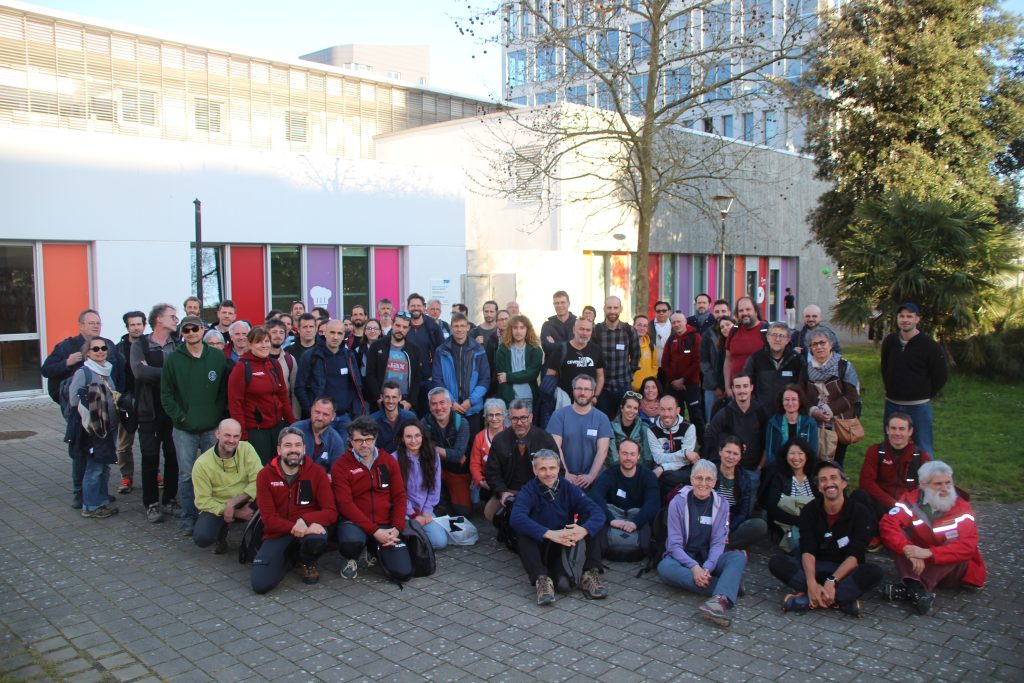
Group photo in front of the Maison des Haubants in Nantes, courtesy of Nantes Métropole (@ H. Bénard)
REPORT ON THE 2026 CONFERENCE
The 10th annual meeting of the OZCAR Research Infrastructure (RI) was held in La Baule (Loire-Atlantique) at the Golden Tulip Hotel from 16 to 19 March 2026. Around seventy-five participants attended in person, whilst a further ten were able to contribute remotely. We would like to thank all participants for the consistently fruitful exchanges and lively discussions that punctuated the conference.
Highlights of the conference:
- A review of the progress of activities (work packages) carried out within the OZCAR Research Infrastructure: data (WP1), the data-model interface (WP2), instrumentation (WP3), cross-cutting themes (WP4) and international activities (WP5), as well as presentations on programmes closely linked to OZCAR RI: the Equipex+ TERRA FORMA, the targeted programme (PC) 3 OBSWATER of the PEPR OneWater and PC5 Carbonium of the PEPR FairCarboN.
- A review of the cross-cutting themes funded since the launch of the call for proposals in 2019, which took the form of a poster session and the collection of feedback from project leaders via a questionnaire distributed in advance. Finally, a workshop provided an opportunity to gather expectations regarding this WP and possible changes to be made to this format.
- The presentation and discussion of the six new cross-cutting theme proposals submitted in 2026, covering a wide range of topics, including two proposals on ‘arts and sciences’, one on sharing hydrometric instrumentation with Haiti, another on the use of artificial intelligence in the study of the critical zone, and two themes relating to hydrogeology and surface-groundwater exchange.
- Presentations by the two keynote speakers on the theme of the ‘Urban Critical Zone’: Ghozlane Fleury-Bahi (Laboratoire de Psychologie des Pays de la Loire, Nantes) and Julie Gobert (LEESU, Marne-la-Vallée).
- The attribution of the 2026 OZCAR Award to Ivan Osorio-Léon and Julia Garagnon for their papers “Deep Roots Supply Reactivity and Enhance Silicate Weathering in the Bedrock Vadose Zone” and “Impact of land-use on PAH transfer in sub-surface water as recorded by CaCO₃ concretions in urban underground structures (Paris, France)” respectively; as well as an honorary award to Jérôme Gaillardet in recognition of his contribution to the OZCAR Research Infrastructure.
- A workshop to define requirements regarding instrument sharing and the development of new sensors in preparation for the RIPOSTE service proposed by the Equipex+ TERRA FORMA
- A workshop to initiate discussions and develop the IR OZCAR’s contribution to the SNO evaluation application scheduled for 2026.
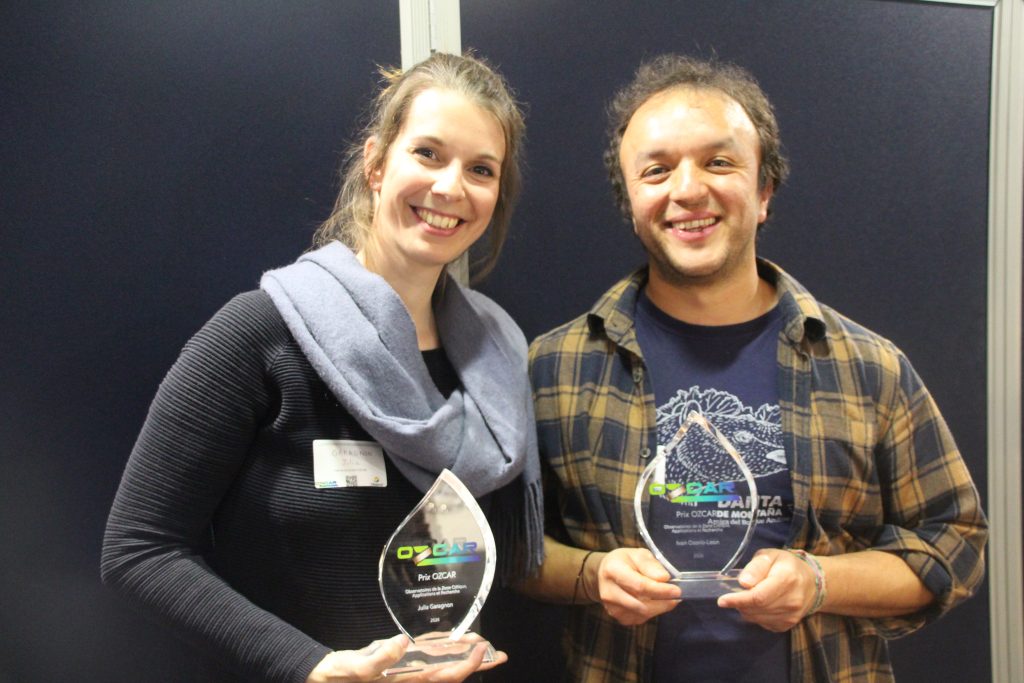
Julia Garagnon (left) and Ivan Osorio-Léon (right) receive the 2026 OZCAR Award for their research. @ H. Bénard
Key takeaways from the meeting:
- The unique nature of the urban site visits, which highlighted the diversity of the OZCAR RI sites and the complexity of studying the urban critical zone. The afternoon presentations showcased projects being carried out at the sites and the partnerships established with local stakeholders.
- The presentations by the two key speakers, which explored the theme of the ‘urban critical zone’ and the associated societal aspects, both in terms of public wellbeing linked to the presence of nature in the city, and the organisational and human aspects linked to changes in urban stormwater management practices, and the widespread adoption of on-site infiltration, which enhances the presence of ‘nature’ in the city.
- The maturation of data access services (WP1 SI Theia/OZCAR) with the launch of the visualisation service. Please note that to be visible, data providers must have submitted their data to the Theia/OZCAR Information System. This data can then be downloaded in harmonised formats once the download and usage statistics services have passed the testing phase and the Data Terra authentication service is operational. Data FAIRisation efforts are being carried out in conjunction with the Equipex+ Gaia Data and FP8 OneWater Data initiatives, whose progress was also presented.
- WP2 (Model Data Interface) has primarily contributed to the development of the eLTER Analysis Tools and Modelling Topic Centre, showcasing the expertise of the French community in modelling the critical zone at local to regional scales and in prototyping tools within the framework of the OneWater Data FP8 project.
- David Fuseau, a new postdoctoral researcher in WP2, presented the progress of his work on improving the representation of unsaturated/saturated zone transfers in the EcH2O-Iso model, which has been in use for several years.
- The activities of WP3 (Instrumentation and Protocols) with the deployment of instruments across several projects; the organisation, in collaboration with Equipex+ TERRA FORMA, of the 2nd OZCAR CRITECH workshop from 26 to 28 November 2025 in Lyon, focusing on the implementation of remote data transmission; a presentation on the progress of the Equipex+ TERRA FORMA project and the services offered, including the RIPOSTE service (Network of Shared Instruments for Observation), for which a brainstorming workshop was organised.
- A forward-looking workshop on the development of the RIPOSTE service, which provided an opportunity to consider the service’s organisational structure and the sharing of expertise, instrumentation requirements and, finally, the new variables that it would be useful to be able to measure.
- A review and outlook day for the WP4 Cross-cutting Theme, launched in 2019, featuring a poster session to present the results from these priejctss, alongside a survey sent to project leaders in advance. A workshop conducted in the form of a World Café provided an opportunity to reflect on how best to showcase the work produced by WP4, the strengths and weaknesses of the current format, and the possible/desirable evolution of the call for cross-cutting themes and its procedures.
- The presentation of six new cross-cutting themes covering a variety of topics, including two Arts and Sciences projects (water colouring to visualise nitrate pollution, a comic book on lead poisoning in the Vosges), two projects related to modelling: the use of AI in the OZCAR RI, the HydroModPy modelling across several catchment areas and an educational tool; a project to share hydrometric instrumentation with Haiti; and a project studying surface/subsurface interactions using data from several observatories.
- The event also provided an opportunity to review progress on the European eLTER research infrastructure and to highlight links with several PEPRs and/or targeted programmes: Targetted Program PC3 (OBSWATER) of the OneWater PEPR, PC5 (Carbonium) of the FAIRCarboN PEPR, as well as the new version of the TRANSFORM PEPR.
- Finally, a workshop provided an opportunity to launch the 2026 accreditation process for the SNOs, which will be led by the OZCAR RI, and to share ideas on the structural aspects of the SNOs, observation strategy and on the governance of the SNOs.
THE KEYNOTE SPEAKERS
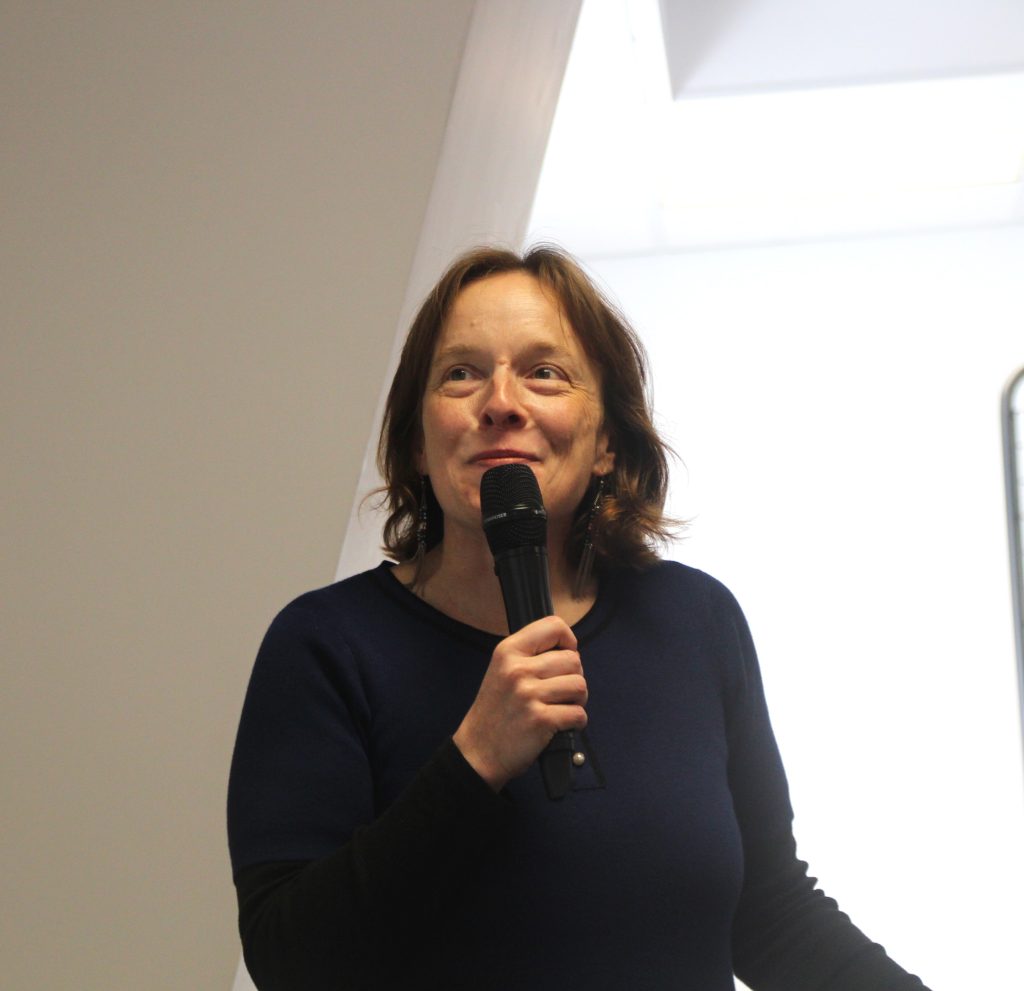
The two keynote speakers (from left to right): Ghozlane Fleury-Bahi (Nantes Social Psychology Laboratory) and Julie Gobert (LEESU)
This year, the theme of the conference was ‘Critical and Urban Zones’. Our two keynote speakers, from the humanities and social sciences, shed light on two aspects of this vast field, using approaches that are still very much in their infancy within the critical zone studies conducted at the OZCAR RI.
- Ghozlane Fleury-Bahi, Professor of Social and Environmental Psychology at the Pays de la Loire Psychology Laboratory (Nantes), presented her work entitled “Nature in the city: what effects on health and well-being in the age of climate change?”. She began by outlining the various dimensions encompassed by the concept of well-being: physical, mental and social, and highlighted elements from the literature on the links between nature and well-being (stress reduction, increased attention, and strengthened social bonds). She then illustrated these theoretical points with examples drawn from projects in which she is involved as part of the roll-out of nature-based solutions. Surveys of residents confirmed some of these theoretical points and showed that there is no direct link between contact with nature and mental well-being, but that this link is indirect and mediated by the increased social bonds fostered by the presence of nature.
- Julie Gobert, a researcher at LEESU (Laboratory for Water, Environment and Urban Systems) in Marne-la-Vallée, explores the various dimensions of the infrastructure built by human societies (transport, drinking water, wastewater, etc.). She demonstrates how these infrastructures possess a material dimension, but also an immaterial one, linked to the organisations that oversee their control, maintenance and, ultimately, their operation. These infrastructures reflect the way we view non-humans, and they profoundly shape the way human societies occupy space. Drawing on the example of urban water management, where the use of nature-based solutions and infiltration at source has been advocated for some thirty years, she shows that their adoption is slow and gradual, particularly because this ‘paradigm shift’ disrupts existing organisations and breaks down the silos within municipal management services. There is therefore no paradigm shift or rapid transformation. Time is an essential factor in removing the barriers to the use of new stormwater management solutions.
FIELD VISITS
The field visits on Tuesday 17 March took place in glorious sunshine. Two groups were formed for two organised tours in a neighbourhood of Nantes belonging to the ONEVU (Nantes Observatory of Urban Environments), a division of the IRSTV (Institute for Research in Urban Sciences and Technologies).
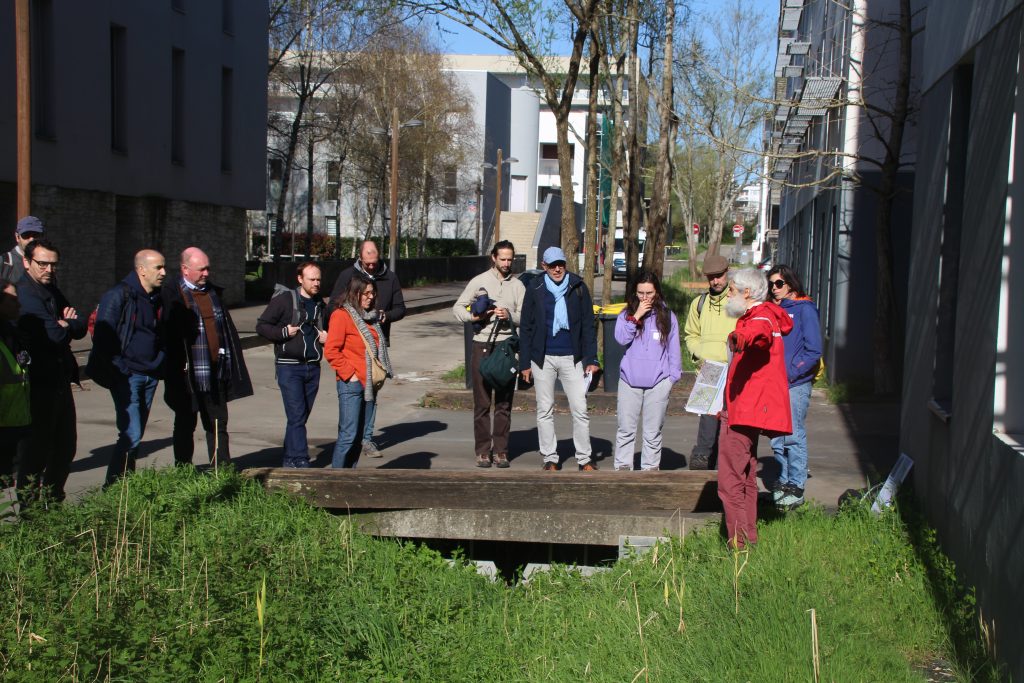
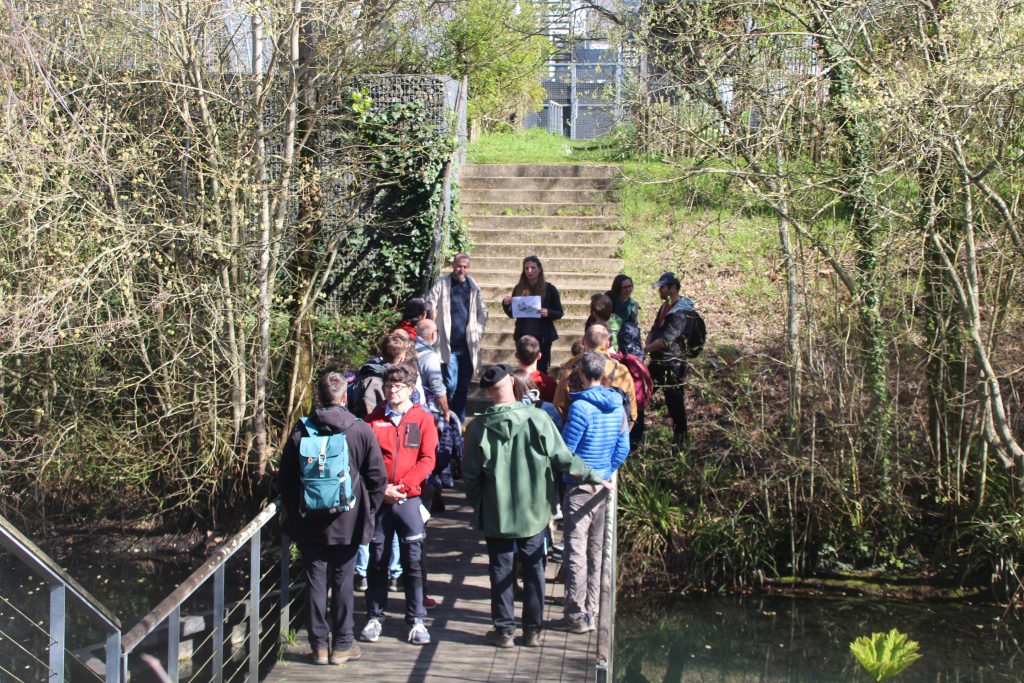
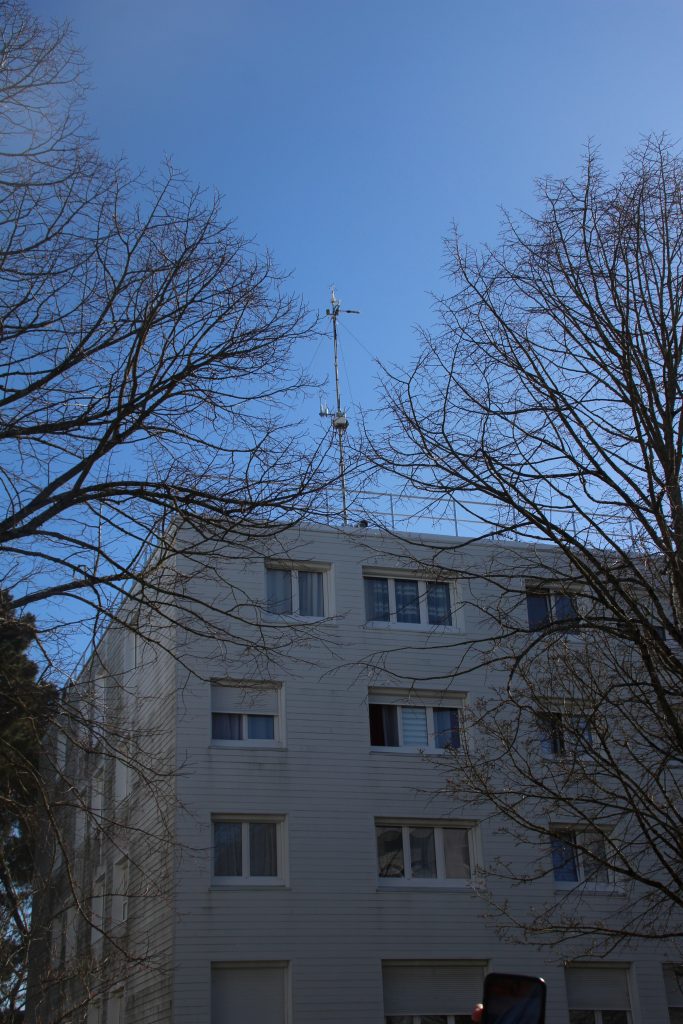
Top photo: the Dumont swale. Bottom photos: left: presentation of the macro-waste project; right: urban climate measurements on the roof of a building. @ H. Bénard
The first visit focused on the Bottières eco-neighbourhood. The visit began with a presentation by Fabrice Rodriguez on the eco-neighbourhood, focusing in particular on the history of the area and its development. The first stop was devoted to a presentation of the Dumont swale and the importance of its structures for effective water management in an urban context. Swales also play a role in pollution management, particularly regarding microplastics and tyre particles. Flow measurements are also carried out on this swale. The stop workshop focused on the Gohards stream, specifically on the management of macro-waste. The final stopp focused on the study of urban microclimatology, specifically on the measurement of heat fluxes and the impact of vegetation. A measuring station installed at a height of 12 metres was demonstrated to some participants. The complexity of installing such stations was also discussed, particularly regarding the necessary standards and public acceptance.
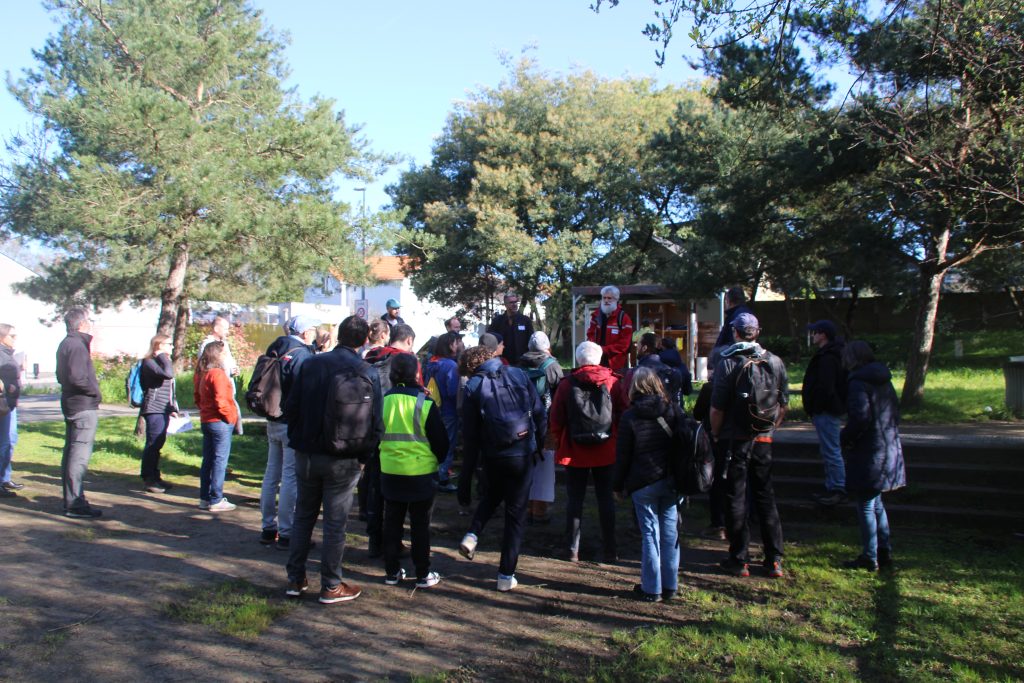
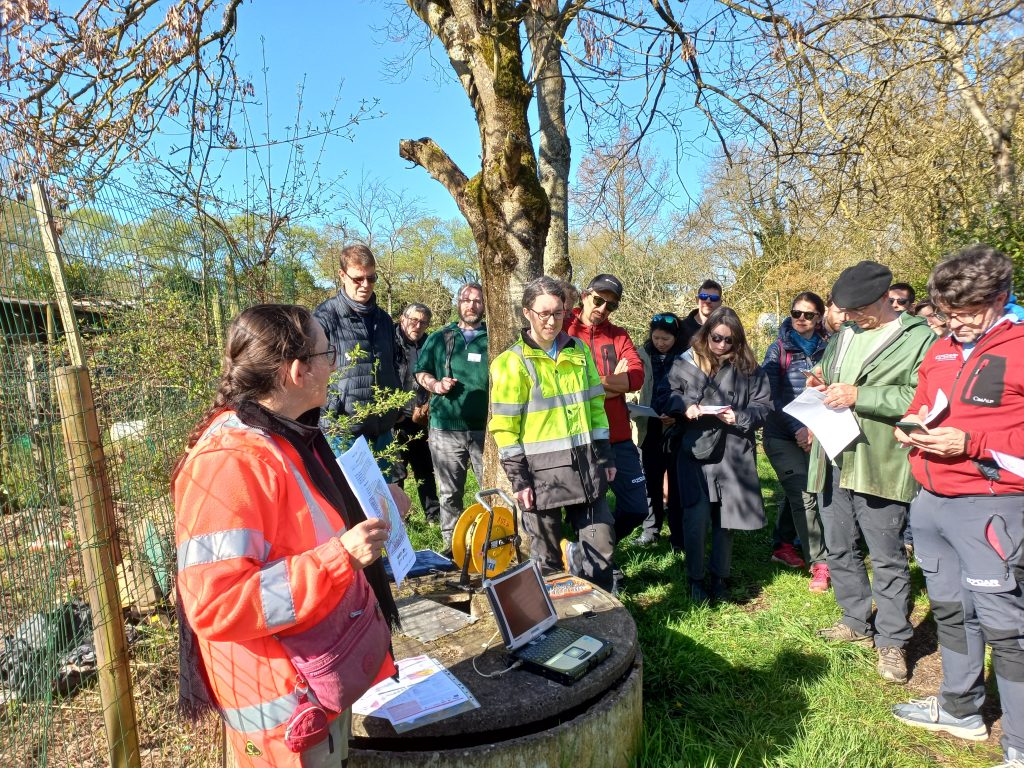
Some photos from the second visit to the Prairie des Mauves. From left to right: Presentation on the issue of soil quality in gardens by B. Béchet and L. Jean Soro; Presentation on piezometric measurements by C. Le Guern and P. Radigois. @ I. Braud
The second group began its visit at the Prairie des Mauves site, situated on the banks of the Loire and close to a former municipal landfill. One of the research topics being investigated at this site concerns the soil quality of the community gardens that have been established here for many years. Following the detection of arsenic in the water used for watering (sourced from a well in the area), a study was carried out to assess the levels of contamination in the soil and produce from these gardens across the city. These analyses revealed levels significantly exceeding permitted standards in some of the vegetables. The presence of a former landfill site also raises questions regarding the quality of the water reaching the nearby Loire, particularly as this area is prone to flooding (up to 1.3 m of water in the area during the floods of February 2026). Measurements show groundwater levels fluctuating with the level of the Loire, with impacts on water quality (conductivity in particular). The tour then continued to the sites of the Ruisseau des Gohards and the Dumont swale from tour no. 1. These two stops illustrated the work on urban water pollution caused by waste and microplastics, as well as the challenges of instrumentation in these highly anthropised environments.
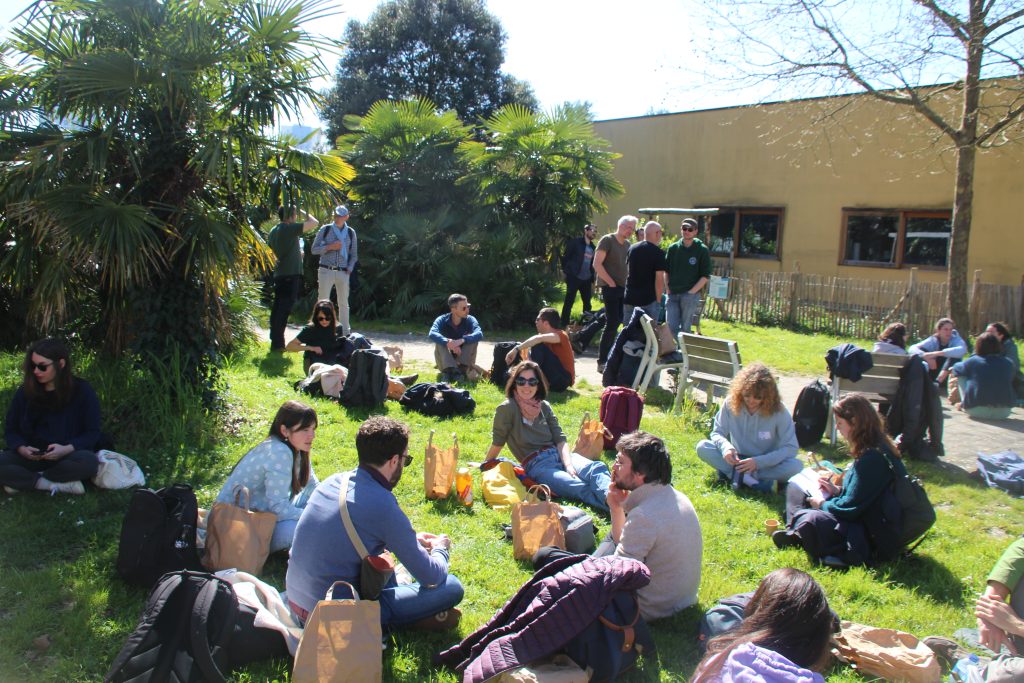
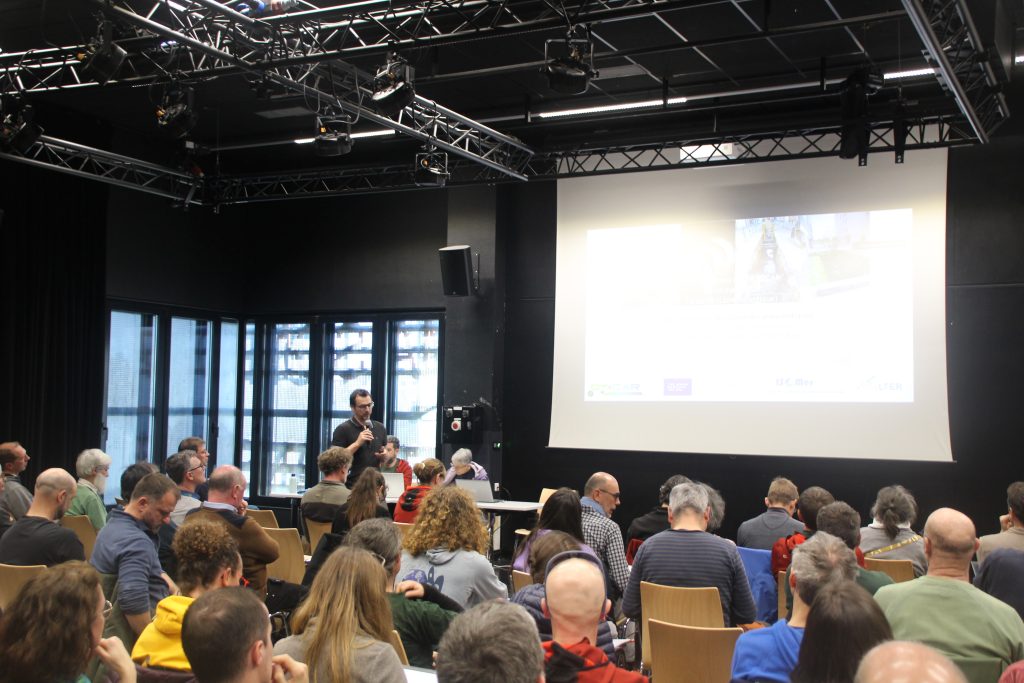
Left: Lunch break in the sunshine. Right: Presentations on the work carried out at the SNO Observil sites in Nantes. @ H. Bénard
After a picnic in the sunshine, the day continued in a venue provided by Nantes Métropole, the Maison des Haubans in the Malakoff district. Several presentations illustrated how the cities of Nantes and Rennes are setting up urban heat island observatories and how they are attempting to assess the impact of urban greening on mitigating these effects. The first presentation of the afternoon was on the SNO Observil, delivered by Fabrice Rodriguez. A second presentation highlighted the data collected by several major cities, as well as medium-sized towns, as part of the SNO Observil initiative, on the issue of urban heat islands. The SNO has enabled the cross-comparison and pooling of data from all these networks, though not without difficulty due to the heterogeneity of the data. This experience only serves to highlight the need for all the ongoing work on harmonising measurements and sharing them in standardised formats. Another presentation, delivered jointly by Amaury Monnot of Nantes Métropole and Cécile Leguern of the BRGM, illustrated the de-sealing policy implemented in Nantes to comply with the Zero Net Land Take Act, notably through the Permepolis research project. Implementing such a policy raises research questions co-developed by scientists and practitioners, which challenge the concept of land-use change and create a need for greater knowledge of urban soils. The third session of the afternoon was dedicated to hydrology and geochemistry, featuring research conducted to characterise pollution from tyre rubber (microplastics) and the hydrochemical functioning of an infiltration basin collecting rainwater from the Cheviré bridge.
MORE INFORMATION
You can find all the information about the programme, presentations and conclusions from the OZCAR 2026 conference here: https://nextcloud.inrae.fr/s/4b8aFg3FD5NZHEc
Videos of the talks by the Keynote Speakers are available on the IR OZCAR YouTube channel: https://www.youtube.com/playlist?list=PL5q_nMCSksH6wtzfDylzTxwVsw8Ny0VjZ