

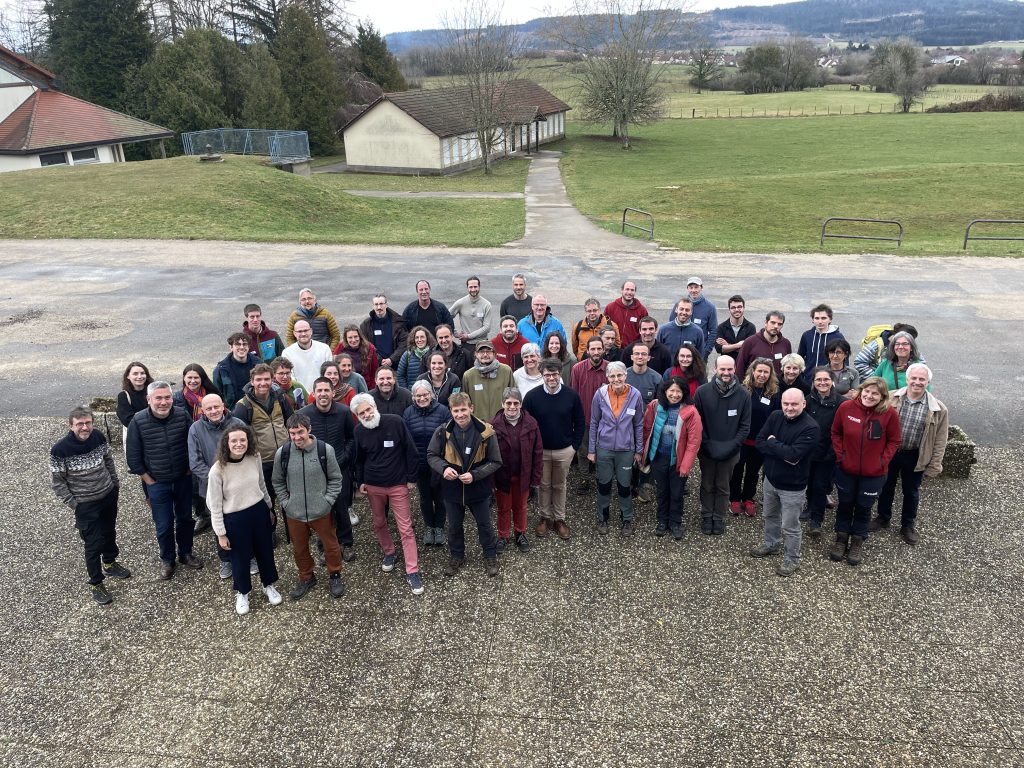
REPORT ON OZCAR’DAYS 2025
The 9th annual OZCAR Research Infrastructure (IR) seminar was held in Levier (Doubs) at the Fauvettes center from March 10 to 13, 2025. Seventy-five participants attended in person and around fifteen participants contributed remotely. We would like to thank all participants for the rich exchanges and lively discussions that punctuated these days.
The seminar focused on the following highlights:
- A review of the progress of activities (work packages) carried out within the IR OZCAR: data (WP1), data-model interface (WP2), instrumentation (WP3), cross-cutting themes (WP4), and international activity (WP5), including the progress of the European eLTER infrastructure project. The introductory presentation also presented the campaign to renew the national research infrastructure list and the topics to be covered in the dossier, which is due by the end of July 2025.
- A review of several cross-cutting themes that made progress in 2024: scientists’ attachment to their observatories, a review of the work and results obtained with RiverLab (high-frequency river chemistry), the use of gravimetry to estimate actual evapotranspiration, and retro-observation of the critical zone.
- The presentation and discussion of three new cross-cutting theme projects on topics as diverse as the sharing of data processing tools, reflexivity on our research practices, and the representation of our object of study, the critical zone. An initial workshop has already provided initial feedback from participants on the theme of reflexivity in relation to our research practices.
- Presentations by two distinguished guest speakers on the theme of “Critical Zone and Health”: Patrick Giraudoux (Chrono-Environnement, Besançon) and Camille Besombes (Sciences Po Paris).
- An initial workshop to begin discussions on the PEPR TRANSFORM
- And, of course, the visits organized on Wednesday morning by SNO Tourbières (Frasne site) and the Jurassic Karst observatory, followed in the afternoon by presentations on research work in these areas and talks by local stakeholders explaining their concerns and their interactions with scientists.
Key takeaways from these days:
- The richness of the field visits offered and the discussions that took place during them. The afternoon presentations also illustrated highly fruitful collaborations between scientists and local stakeholders.
- The presentations by the two key speakers, who illustrated the theme of “Critical Zone and Health” with a presentation of the work of IPBES, the OneHealth and EcoHealth concepts, and examples where transdisciplinary approaches combining health, critical zone studies, and links with local stakeholders are enabling solutions to be found to complex ecosystem and human health problems.
- The demonstration of a prototype including tools for viewing and downloading data in harmonized formats from the Theia/OZCAR Information System (IS) portal, as well as statistical tools for downloads. The tool is expected to be put into production by the end of 2025. IR OZCAR continues to support the development of the hydrogeophysical database and worked in 2024 on a new solution for high-resolution digital terrain models. The team’s activity in national data projects, such as PC8 OneWater Data, has intensified and in 2025 it will work on establishing connections with eLTER data management tools.
- A new publication in Geochimica Cosmochimica Acta highlighting the reactive transport modeling work carried out by Julien Ackerer on four basins in the OZCAR network as part of his postdoctoral research in OZCAR RI, as well as the ongoing promotion of the results of the prospective workshop on critical zone modeling in a publication to be submitted to the special issue of Hydrological Processes, open until the end of February 2026.
- On the instrumentation side (WP3), 2024 will be marked by enhanced interactions with Equipex+ TERRA FORMA and the definition of the services that the project will offer. The team leading WP3 is heavily involved in the construction of the RIPOSTE (Réseau d’Instruments Partagés pour l’Observation) instrument park, which will link available sensors, expertise on these instruments, and the needs of scientists. We can also highlight the significant scientific value of the IR instrument park in 2024.
- The holding, with Equipex+ TERRA FORMA, of the first OZCAR CRITECH days from November 18 to 20, 2024, in Lyon. TERRA FORMA colleagues shared their expertise in the assembly and programming of communication boxes for Anthropocene sensors.
- The organization of the first IR OZCAR hydrometry training course from November 20 to 22, 2024, delivered by colleagues from the River Hydraulics team at RiverLy (INRAE, Lyon Villeurbanne).
- The presentation of progress on several cross-cutting themes is always a highlight, illustrating the scientific contribution of these interdisciplinary and inter-observatory projects, with notable results on the exploitation of RiverLab data, the use of environmental DNA, retro-observations of the critical zone, and the use of gravimetry to estimate evapotranspiration. The arts and science projects also illustrated the importance of raising awareness of our subjects of study. The new themes presented this year invite us to reflect on sharing our data analysis tools and representing the critical zone, but also to question our research practices, with an initial workshop that allowed participants to begin this reflection.
- The conference also provided an opportunity to describe the progress made in the construction of the European eLTER RI: drafting of Standard Observations measurement protocols, development of the services to which France wishes to contribute, and identification of the means for this construction, based on several PEPRs, including the PEPR TRANSFORM, for which an initial workshop provided an opportunity to reflect on the transformation of our observatories. These discussions are only just beginning and will continue in the coming years.
KEYNOTE SPEAKERS
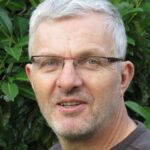
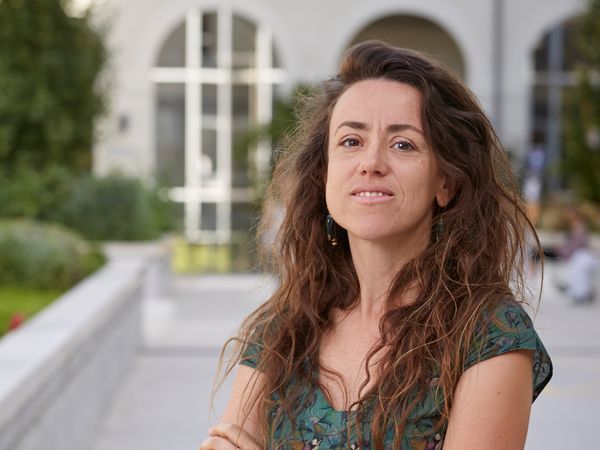
Photo captions: The two keynote speakers (from left to right): Patrick Giraudoux, Professor Emeritus, Marie and Louis Pasteur University, Chrono-Environment Laboratory, Besançon) and Camille Besombes, specialist in infectious and tropical diseases and doctor of epidemiology and public health, currently doing postdoctoral research at SciencePo’s MédiaLab.
This year, the theme of the conference was “Critical Zone and Health.” Our two keynote speakers shed light on several aspects of this vast field: the work of the IPBES (Intergovernmental Science-Policy Platform on Biodiversity and Ecosystem Services) on the one hand, and the concepts of OneHealth and EcoHealth on the other, all illustrated with examples from their research.
- Patrick Giraudoux, Professor Emeritus at Marie and Louis Pasteur University and at the Chrono-Environnement laboratory in Besançon, presented the processes leading to the publication of the IPBES (Intergovernmental Science-Policy Platform on Biodiversity and Ecosystem Services) reports in which he participates. He also illustrated how failing to take into account the interconnections between water, biodiversity, food, and health issues can lead to counterproductive measures, but also what the cost of inaction can be. On the other hand, taking territorial issues into account in a systemic manner can lead to solutions that are acceptable to stakeholders. He illustrated this approach with the issue of the proliferation of voles in the Jura grasslands, linked to the intensification of Comté cheese production, the presence of predators, and the spread of alveolar echinococcosis, which is a zoonosis. A video also illustrated the results of the CARELI (Campagnol, Renard, Lièvres) project, which has been collecting data for ten years to fuel discussions between the various stakeholders in the region on the classification of the fox as a species likely to cause damage.
- Camille Besombes, a specialist in infectious and tropical diseases and a doctor of epidemiology and public health, presented the OneHealth concept, which proposes an integrated, systemic, and unified approach to public, animal, and environmental health, with illustrations drawn from several recent epidemics. She also showed the limitations of using this concept with approaches that are more reactive than preventive, where the focus is on preparedness to respond to the emergence of a disease, to the detriment of preventive approaches, and with little input from environmental sciences. In response to these limitations, the EcoHealth approach has emerged. It aims to understand the determinants of infectious disease transmission in their ecosystems of origin and recent changes in the territories involved in their emergence. This approach allows for more preventive approaches, starting not from a disease, but from a territory, with an example that she is trying to implement in the Cantal region.
FIELD VISITS
The field trips on Wednesday, March 12 took place in the rain, but this did not discourage the participants, who split into two groups and visited the Jurassic Karst Observatory (SNO Karst) and the Frasne peat bog (SNO Tourbières) respectively.
The tour of the karst sites was led by Marc Steinmann and Jean-Baptiste Charlier. Bad weather prevented us from admiring the landscape at the Monmahoux viewpoint, so the tour began with a first stop at the source of the Lison, where the geological and hydrogeological contexts were presented, as well as the issues related to water contamination, particularly by nitrates, leading to eutrophication of waterways and fish mortality. We then headed to the magnificent site of the source of the Lison, then to the Sarrazine cave, where the spring acts as an overflow system. The second stage of the visit took us to the source of the Verneau, where water levels and nitrate concentrations have been monitored since 2020 using a Spectro-Lyser Scan probe. At the same time, lysimeters on the plateau measure drainage from the meadows into the karst system in order to assess the sources of pollution found downstream in the waterways.
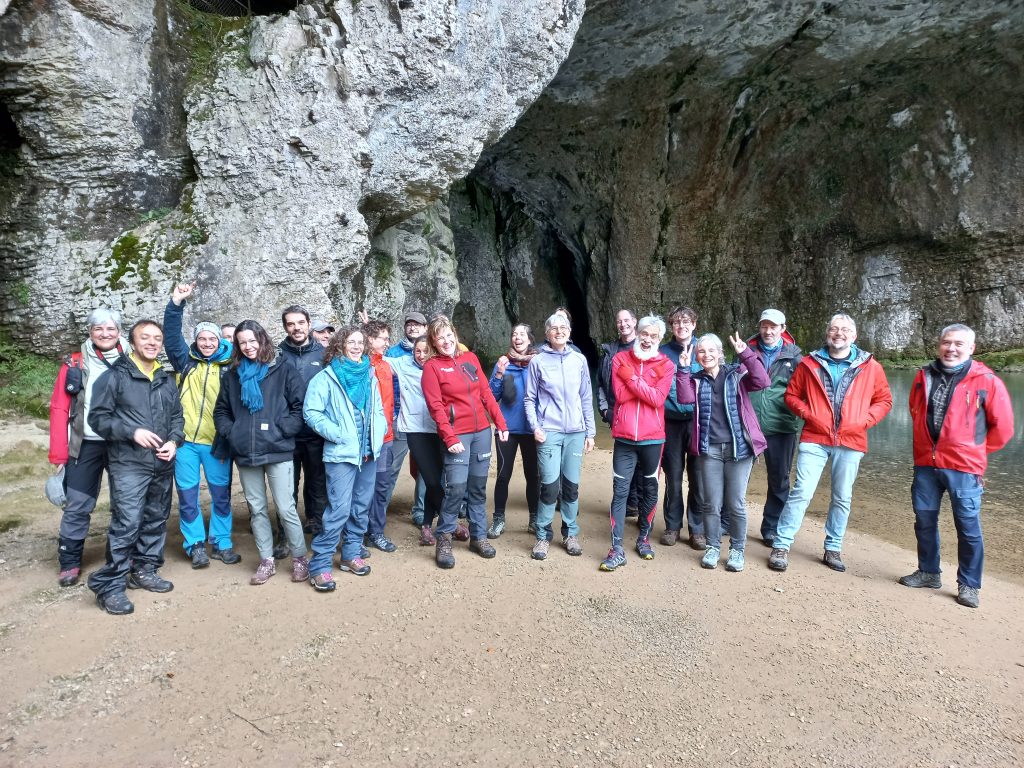
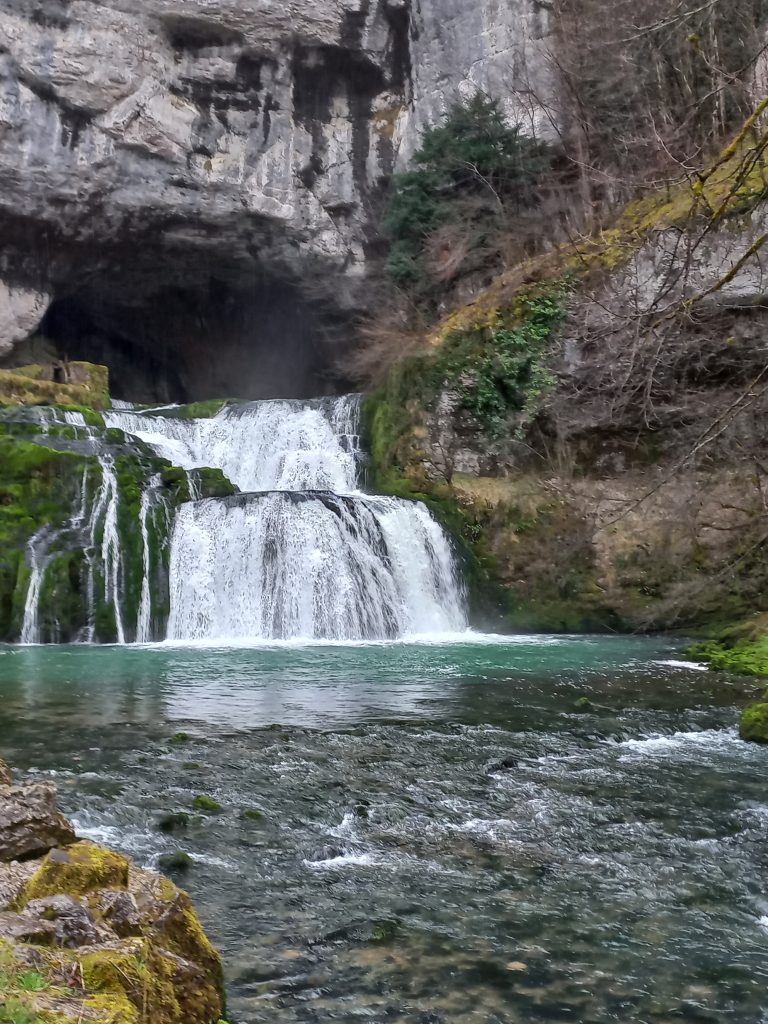
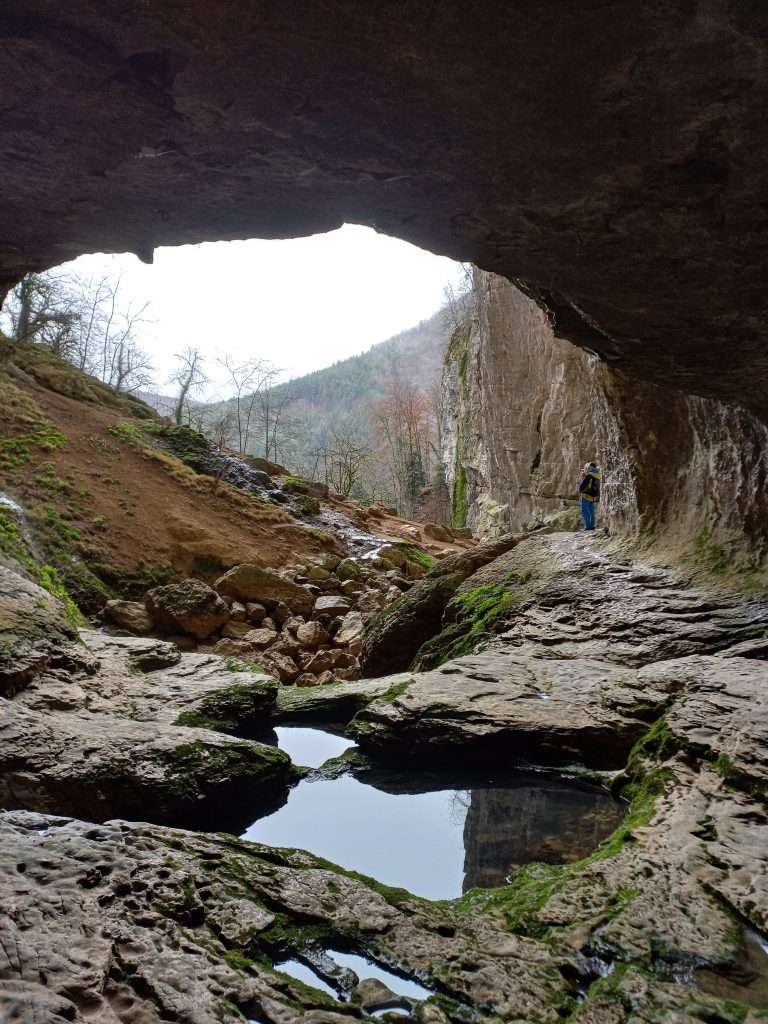
Some photos from the field trip to the karst sites. Top: Group photo at the Sarrazine cave (@. E. Gayer); Bottom (from left to right) The source of the Lison and the Sarrazine cave. (@ I. Braud)
The visit to the Frasne-Bouverans peat bogs was led by Guillaume Bertrand, Daniel Gilbert, and Alexandre Lhosmot (from the Chrono-Environnement laboratory), Geneviève Magnon and Pierre Agnola (from the Frasne-Bouverans Regional Nature Reserve), Fatima Laggoun-Défarge (from the Orléans Institute of Earth Sciences), and Adrien Jacotot (Carboflux consulting firm). In equally cool and humid conditions, the field guides led the group on a 6 km “grand loop” of public trails through the reserve and certain areas reserved for research experimentation and observation. After a general presentation on the scientific issues at the outlet of the Forbonnet basin, the group visited the “active” peat bog, first from the footbridges providing access to the SNO Tourbières instrumented plots, and then from the observation platform, where the history of the peat bog and this instrumented site was recounted. The visit continued to the Creux du Lard sinkhole, representative of water circulation in karst environments. It ended at a dike built a few years ago to restore a bog that was no longer receiving sufficient water.
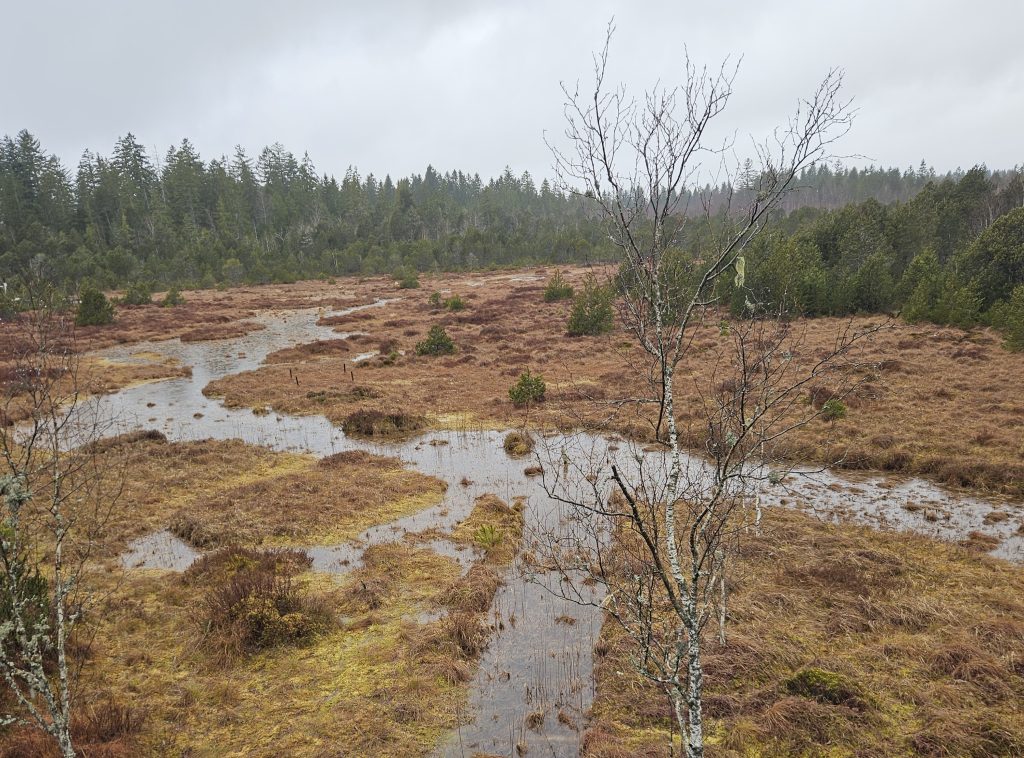
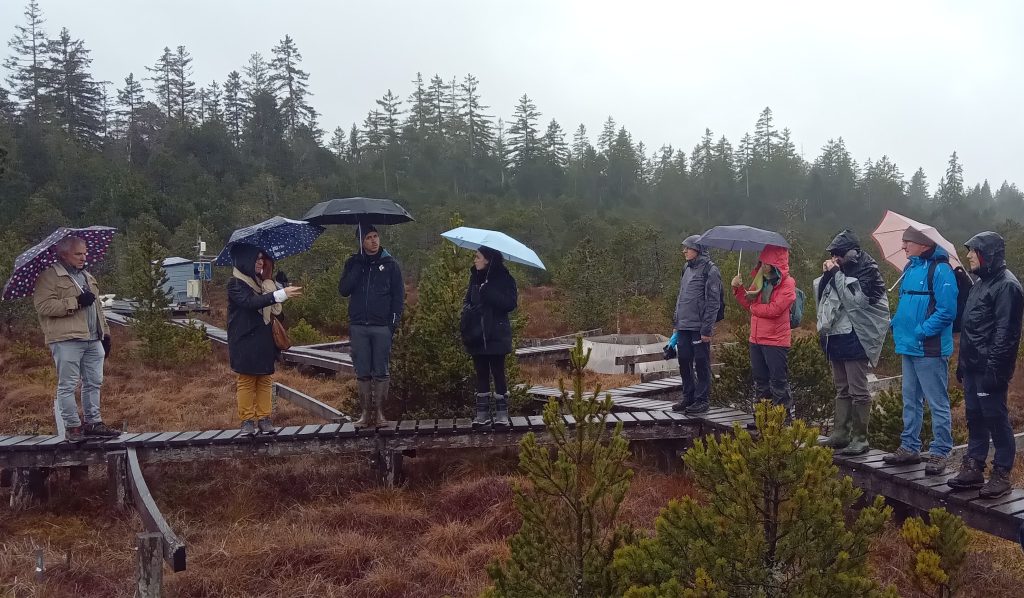
Some photos from the field visit to the “active” peat bog in the Frasne-Bouverans Regional Nature Reserve: on the left, from the observation platform @ B. Boudevillain; on the right, from the pontoons @ G. Bertrand.
After a picnic in the dry at the Fauvettes center, the afternoon was devoted to indoor presentations of research conducted on the Frasne peat bog on the one hand and on karst systems on the other. We had the pleasure of welcoming local stakeholders (EPAGE Haut-Doubs Haute-Loue and the Frasne Bouverans Regional Nature Reserve) who presented their fieldwork and the results of LIFE projects aimed at rehabilitating peat bogs and assessing their evolution in the context of climate change. Our colleagues also gave an overview of their research work on the Frasne peat bog and the prospects for its development, in particular its certification as a site by the European eLTER Infrastructure. On karst environments, we were presented with several facets of the research: responses of these territories to global change, exploration of the use of seismic geophysical methods for monitoring karst systems, and a study in collaboration with the drinking water managers of the city of Besançon aimed at better understanding the mechanisms that feed the Arcier spring.
Finally, Carole Bégeot presented the establishment of an observatory for changing forests in the Comté region, aimed at monitoring the impacts of forest decline on landscapes and socio-ecosystems. This initiative involves not only researchers but also stakeholders in the timber industry, given the economic importance of this activity in the region.
FURTHER INFORMATION
Please find all information on the program, presentations and conclusions of the OZCAR days : https://nextcloud.inrae.fr/s/rg2YkkkkSZMmd4b
Keynote speakers’ videos are available on the OZCAR RI Youtube channel : https://www.youtube.com/playlist?list=PL5q_nMCSksH5khvXpt8wIdrCtcGi-PYzB
See also the newsletter 2025 (in French) : https://nextcloud.inrae.fr/s/3H4CHLSod6w3Fxk